
Signs Your Old Mattress May Be Affecting Your Sleep
Your mattress is something you use every night, but it’s easy to overlook how much it can change over time.
Years of regular use can affect a mattress’s comfort, support, shape, and overall feel. Because these changes often happen gradually, you may not immediately notice that your mattress feels different from when you first bought it.
But does an old mattress automatically need to be replaced?
Not necessarily.
The condition of your mattress matters more than simply its age.
Here are some signs that an older mattress may no longer be providing the comfort and support you prefer.
Quick Overview
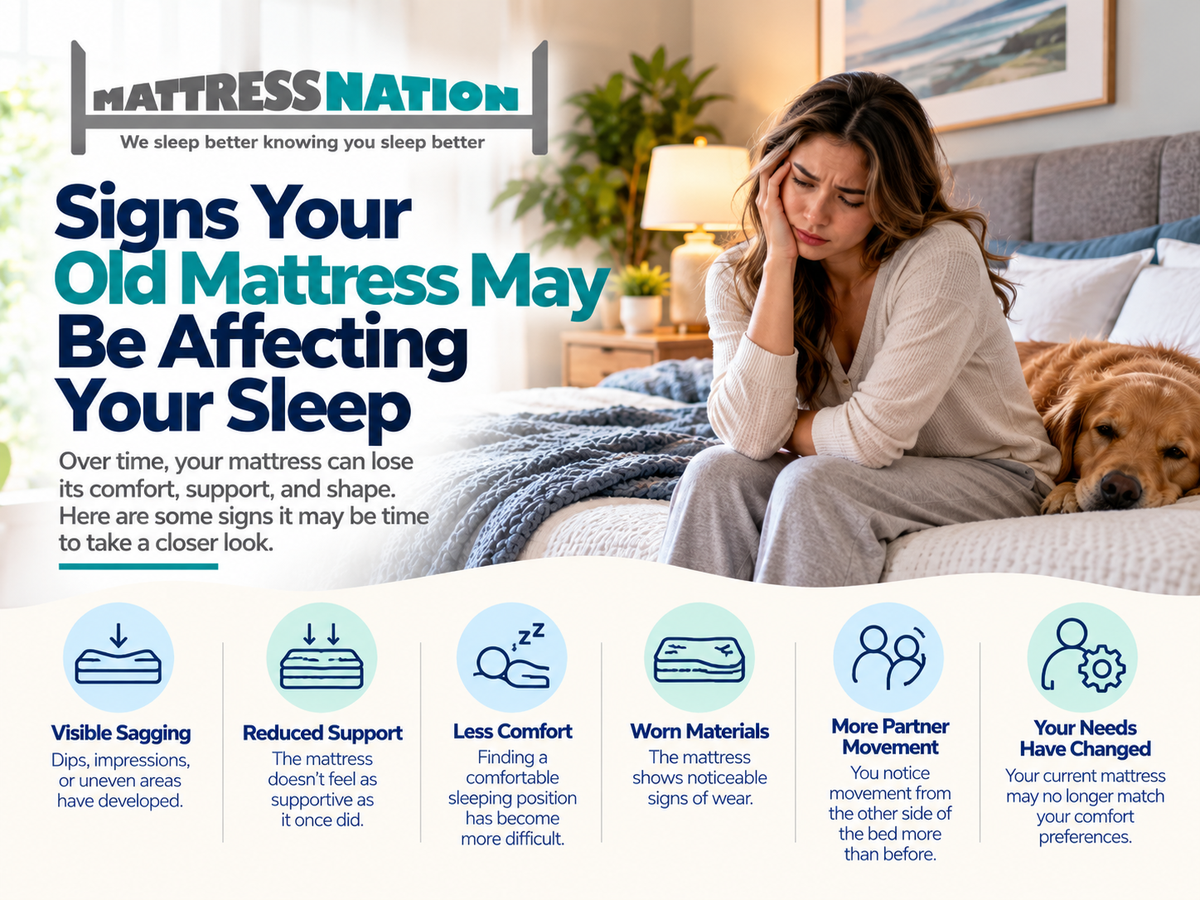
It may be time to take a closer look at your mattress if you notice:
Dips, impressions, or uneven areas have developed.
The mattress doesn’t feel as supportive as it once did.
Finding a comfortable sleeping position has become more difficult.
The mattress shows noticeable signs of wear.
You notice movement from the other side of the bed more than before.
Your current mattress may no longer match your comfort preferences.
The Mattress May Lose Support Over Time
One of the biggest changes that can happen as a mattress gets older is a gradual difference in support.
With years of regular use, comfort materials can soften and other components can experience wear.
You might notice that certain areas sink more than they used to or that your body doesn’t feel as evenly supported.
Because these changes usually happen slowly, it can be difficult to recognize them immediately.
The important question isn't simply:
“How old is my mattress?”
It's:
“Does my mattress still provide the support and comfort I want?”
Sagging Can Make It Harder to Get Comfortable
Visible sagging is one of the easiest signs of mattress wear to recognize.
You May Notice:
- Dips where you normally sleep
- Uneven areas
- Deeper body impressions
- Changes in the mattress's original shape
If your body continually settles into an uneven area, finding a comfortable sleeping position may become more difficult.
Keep in mind that some body impressions can be normal depending on the mattress construction.
If you're unsure, check the manufacturer's care and warranty information to understand what is considered normal for your mattress.
Pressure Relief May Not Feel the Same
A mattress that once provided comfortable cushioning around your body may feel different after years of use.
This can be especially noticeable around pressure-sensitive areas such as the shoulders and hips.
For example, side sleepers typically place more direct pressure on these areas when lying down.
If the comfort layers have changed significantly, you may find yourself shifting positions more often while trying to get comfortable.
The Mattress May Feel Different Than You Remember
Think about how your mattress felt when it was new.
Does it still feel that way?
Over Time, You May Notice That It:
- Feels softer
- Feels less responsive
- Has developed uneven areas
- Doesn't provide the same cushioning
- Doesn't feel as supportive
- Takes longer to feel comfortable on
These changes don't necessarily mean the mattress suddenly became “bad.”
Mattresses naturally experience wear with regular use.
What matters is whether those changes are affecting your comfort.
You May Notice Your Partner Moving More
If you share your bed, motion can also become part of the equation.
A mattress that once did a good job of limiting movement across the sleep surface may feel different as its materials change over time.
You Might Begin Noticing Your Partner:
- Changing sleeping positions
- Getting into bed
- Getting out of bed
- Moving around during the night
If motion isolation is important to you, this is another feature worth considering when evaluating your current mattress.
Your Sleep Preferences May Have Changed
Sometimes the mattress isn't the only thing that has changed.
Your preferences may have changed too.
A mattress you loved years ago may no longer match what feels comfortable today.
You Might Now Prefer:
- More cushioning
- A firmer feel
- Better pressure relief
- Less motion transfer
- More responsiveness
- Better temperature management
Your sleeping position can change too.
You may have been primarily a back sleeper when you purchased your mattress but now spend more time sleeping on your side.
The mattress may still be functional — it simply may no longer be the best match for you.
Newer Mattress Features May Better Match Your Needs
Mattress technology continues to evolve.
Depending on what you're looking for, newer mattresses may offer features such as:
Features You May Find Today:
- Advanced pressure-relieving materials
- Cooling covers
- Heat-dispersing technologies
- Improved motion isolation
- Individually wrapped coils
- Zoned support
- Adjustable-base compatibility
- Smart sleep technology
That doesn't mean you should replace a comfortable mattress just because newer technology exists.
But if your current mattress is already uncomfortable or worn, these features may be worth considering when you eventually replace it.
How Old Is Too Old for a Mattress?
There's no universal expiration date for every mattress.
How long a mattress remains comfortable can depend on several factors, including:
- Materials
- Construction
- Frequency of use
- Mattress care
- Foundation or base
- Body weight
- Manufacturer recommendations
That's why age alone shouldn't determine whether you replace your mattress.
Instead, consider its condition, comfort, and support.
If your mattress still feels comfortable and supportive and remains in good condition, its age alone doesn't necessarily mean you need a new one.
Can a Mattress Topper Fix an Old Mattress?
Sometimes — but it depends on the problem.
If your mattress is still supportive but feels slightly firmer than you'd like, a topper can provide an additional comfort layer.
However, a topper isn't designed to repair a mattress that's significantly:
- Sagging
- Damaged
- Uneven
- Worn out
- No longer supportive
Adding extra cushioning on top doesn't fix problems with the underlying mattress.
If the mattress itself is no longer providing the support or comfort you prefer, replacing it may be the better option.
How Can You Help Your Mattress Last Longer?
Good mattress care can help protect your sleep surface.
A few simple habits include:
- Use a quality mattress protector
- Keep the mattress clean and dry
- Address spills quickly
- Use the proper foundation or base
- Follow the manufacturer's care instructions
- Rotate the mattress if recommended by the manufacturer
A mattress protector can also help create a barrier against everyday spills, stains, and moisture.
Always check the care instructions for your specific mattress, since recommendations can vary between brands and constructions.
Is It Time to Replace Your Mattress?
Instead of looking only at the mattress's age, ask yourself:
Is it still comfortable?
Does it still provide the support I prefer?
Are there noticeable dips or uneven areas?
Has the feel changed significantly?
Am I having more difficulty finding a comfortable sleeping position?
Do I sleep more comfortably on other mattresses?
Does my current mattress still match my sleeping preferences?
Your answers can tell you much more than the mattress's age alone.
Final Takeaway
An old mattress isn't automatically a bad mattress.
The bigger question is whether it still provides the comfort and support that work for you.
Sagging, uneven areas, changes in support, reduced comfort, increased motion transfer, and changing sleep preferences can all be signs that it's worth taking a closer look at your mattress.
Instead of replacing your mattress simply because you've owned it for a certain number of years, pay attention to how it looks, how it feels, and how well it works for the way you sleep today.
Sometimes, age really is just a number.
Comfort and support tell you much more.
Think It Might Be Time for a New Mattress?
If your current mattress no longer provides the comfort or support you prefer, comparing different mattress types and comfort levels can help you understand what works better for you today.
Shop All Mattresses → Visit Mattress Nation →Questions? Call Mattress Nation: (408) 394-2534
We sleep better knowing you sleep better.